
How Arrest Warrants Work in St. Landry Parish
No arrest warrant in St. Landry Parish starts with a patrol decision. It starts with a sworn affidavit. Someone puts an offense and its supporting facts on paper under oath. A judge or magistrate reads that paperwork and weighs whether probable cause exists. If the answer is yes, the warrant issues and the case opens in the court that signed it. District felony matters land in the Twenty-Seventh Judicial District Court in Opelousas. City charges land in that city's own court. The paperwork itself names the office. Louisiana also permits a warrant after an indictment or a bill of information under La. C.Cr.P. art. 496, unless the court issues a summons instead. That route explains why a serious case can carry both a docket number and a warrant at once.
Affidavits Behind St. Landry Parish Warrants
La. C.Cr.P. art. 202 governs the front end of the process in St. Landry Parish. The affidavit has to name the offense and lay out the facts behind it. The magistrate then has to find probable cause before signing anything. The statute also covers electronic submission of the paperwork, which is why a warrant can be signed without anyone carrying a file across a courthouse. The whole procedure settles one narrow point: whether the court will allow the person to be brought in. It settles nothing else about the charge. Note: Probable cause is a threshold for issuing process, not a finding that the offense occurred.
Arrest Warrants: What They Contain
La. C.Cr.P. art. 203 lists what a St. Landry Parish warrant must contain. The document stays short, though the file behind it grows fast.
| Issuing Court | The court or magistrate that signed the order, such as the 27th JDC. |
|---|---|
| Issue Date and Place | When and where the process was signed, stated on its face. |
| Person Named or Described | The subject, by name or by a description sufficient to identify them. |
| Offense | The charge the affidavit supports. |
| Command to Arrest and Book | The direction to take the person into custody and bring them before the court. |
| Magistrate Signature | The signature and title of the officer who issued it. |
| Bail Direction | Any bail amount or condition the warrant itself specifies. |
| Case Number | The court's file key, usually tied to a district docket such as 2026-CR-011248. |
The statute behind that list sets out each required field.
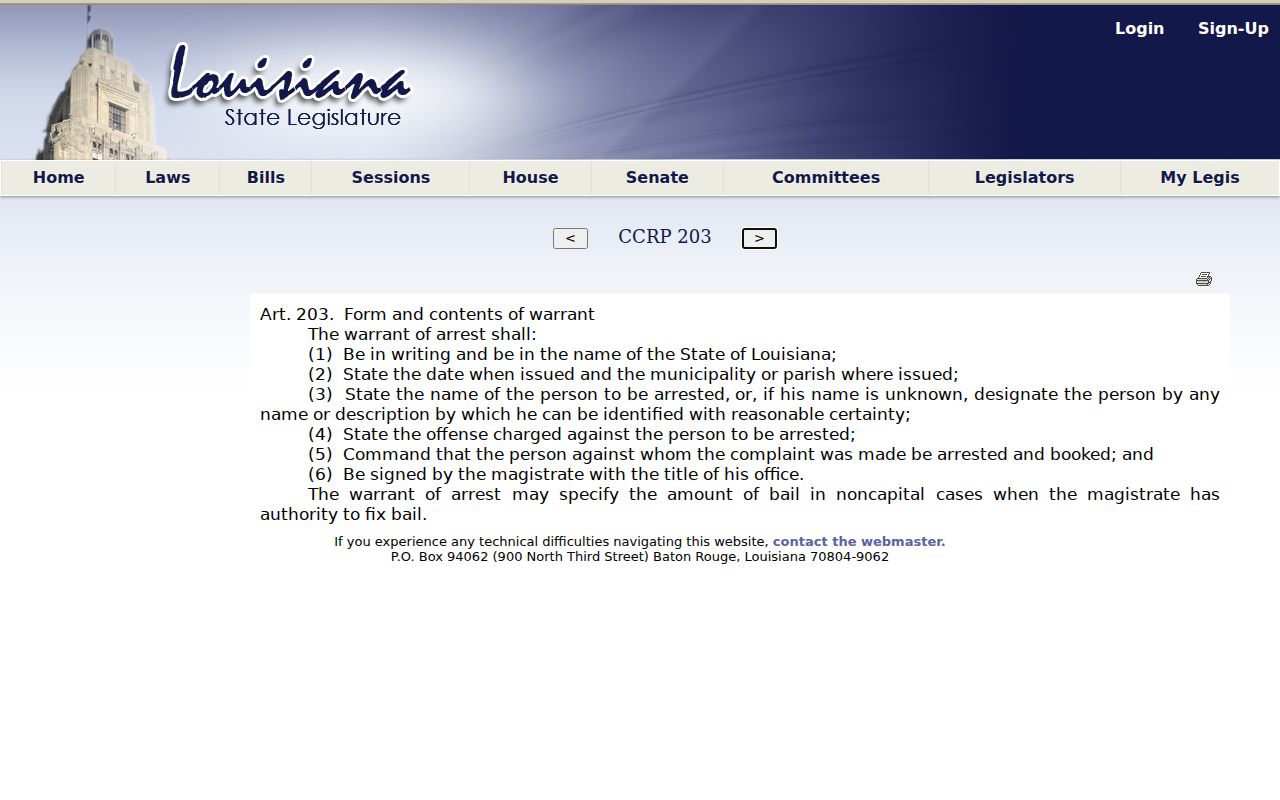
Short on its face is the norm. Write the case number down first. Service returns, booking entries, and minute entries all hang off it, and a St. Landry Parish clerk can pull the file far faster with it in hand.
Where St. Landry Parish Warrants Are Filed
The Courts Division of the St. Landry Parish Clerk of Court keeps district criminal proceedings, indexes both civil and criminal suits, and holds court images from 1997 forward. Anything older sits in the Archives Room in the courthouse basement. The Twenty-Seventh Judicial District Court runs four divisions. Local rules assign cases among the four judges at random, with exceptions for traffic, non-support, protective-order, and juvenile matters. The division letter may not match the courtroom you expect. Ask by case number instead. One practical snag exists. The clerk contact page lists Suite 207 at 118 South Court Street, while the courts overview names Suite 121 for the same division. Call 337-942-5606 to confirm the room.
How Warrants Get Served in St. Landry Parish
Issuing and serving are two separate acts. The court signs; a peace officer acts. The rule on execution spells out who may carry out a St. Landry Parish warrant.
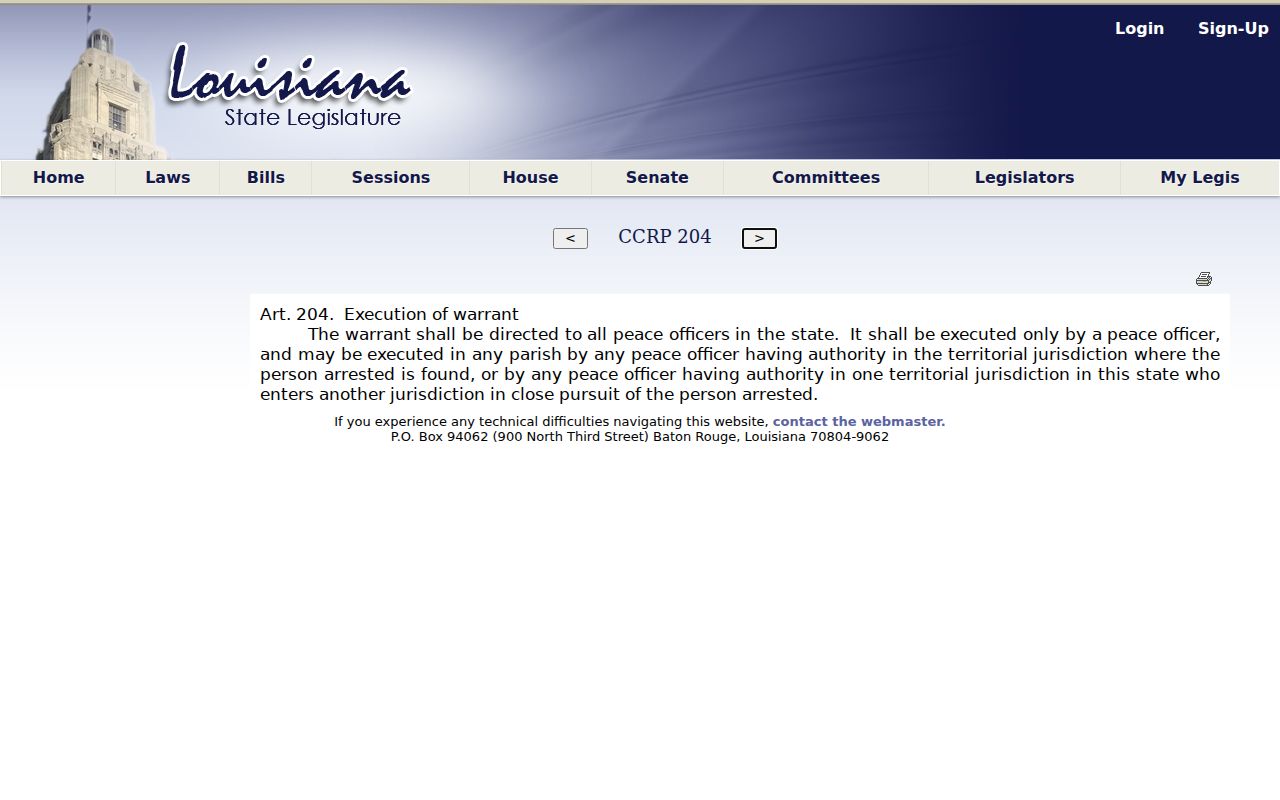
The law directs a warrant to peace officers, and an authorized officer may execute it in another parish. That is why a warrant signed in Opelousas can be served elsewhere in Louisiana. After service, the officer files a return. Booking then creates a separate custody record. Neither one closes a St. Landry Parish case; the docket continues, and the court sets what happens next.
Who Serves St. Landry Parish Warrants
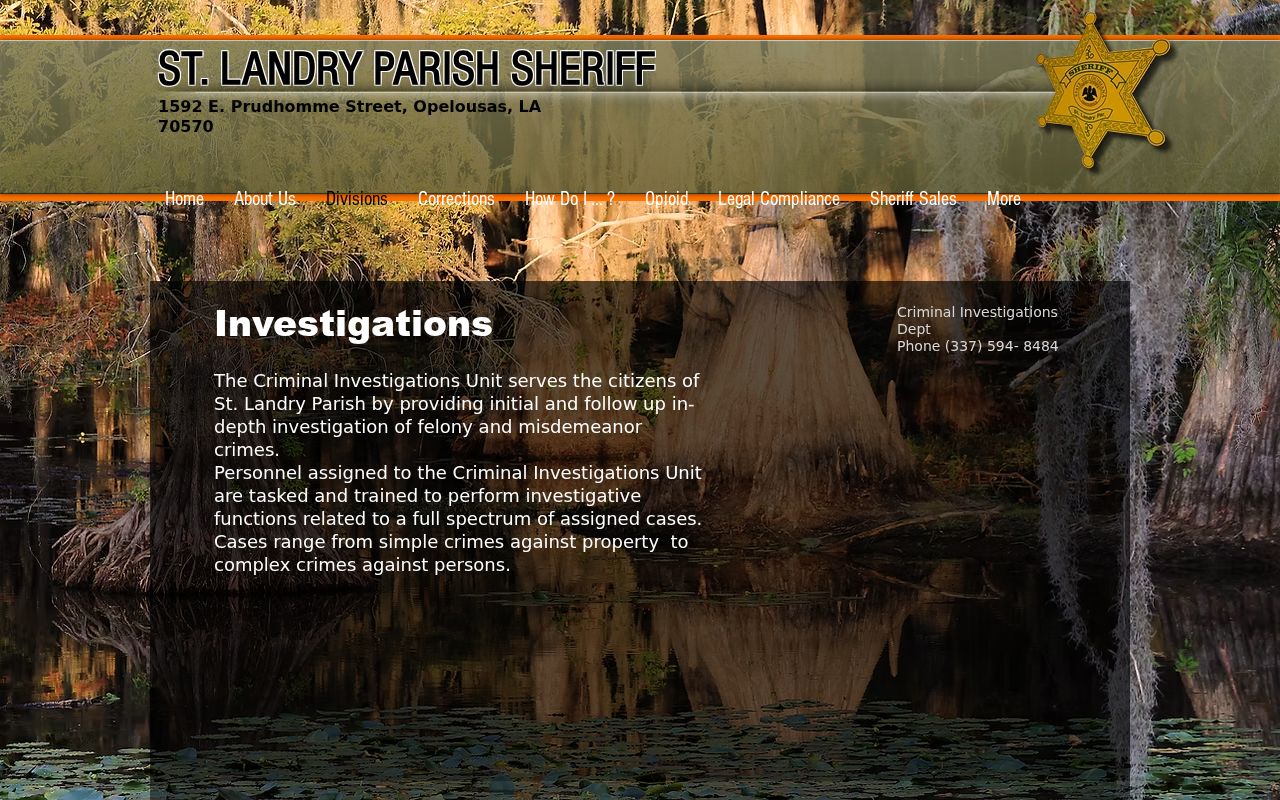
The Criminal Investigations Unit at the St. Landry Parish Sheriff's Office handles felony and misdemeanor investigations. That unit is where a district case usually begins before it reaches a courtroom.
Several offices can serve a St. Landry Parish warrant at different points. Patrol deputies, city police, and city marshals all take part. Opelousas City Marshal Paul Mouton is listed at 337-948-2577 ext. 5119, and Eunice City Marshal Terry Darbonne at 337-457-6580. The issuing court says which contact fits a given case. Do not call the parish jail for a status answer. The jail at 108 South Market Street handles custody questions at 337-948-5804, while the main switchboard at 337-948-6516 routes everything else. Note: The issuing court explains a case's status, while the serving agency explains service and custody only.
Arrest Warrants, Summonses, and Bench Warrants
Three documents can pull a person back into a Louisiana court, and St. Landry Parish treats them as distinct tools.
| Document | What Triggers It | What It Commands | Who Issues It |
|---|---|---|---|
| Arrest warrant | A sworn complaint, affidavit, or indictment showing probable cause | Arrest and booking | A judge or magistrate |
| Summons | The same charging paperwork, when the court chooses not to arrest first | An appearance on a set date | The court handling the case |
| Bench warrant | A missed appearance, an unpaid obligation, or a violated court order | Arrest and a return to court | The judge in the open case |
A summons is the gentler route, with no arrest command attached. A bench warrant grows out of a case that already exists in a St. Landry Parish court. An arrest warrant can open a case that did not exist before. That is why the probable cause paperwork matters so much along that route.
What a St. Landry Parish Warrant Proves
A warrant record in St. Landry Parish shows one fact only. It proves a judge issued the order. That is the whole of it. The case behind that order keeps its own paper trail as it moves, and a St. Landry Parish docket can later record a dismissal, a plea, a trial verdict, or some other end. Those entries stand apart from the warrant line, so a reader who stops at the warrant misses most of the file. Expungement and sealing are separate steps with their own Louisiana rules. Recalling a warrant is not the same as restricting the record afterward, and each question deserves its own answer at the clerk's window.
Handling an Arrest Warrant in Your Name
If a warrant might carry your name, work the case, not the rumor. Start with the St. Landry Parish court that issued it, not a jail lobby.
- Identify the issuing court and the exact case or warrant number from any paper you have.
- Call the Clerk of Court at 337-942-5606, extension 5113, or the city court named on the notice.
- Ask whether the warrant is active and what the court accepts as the next step.
- Ask a licensed Louisiana attorney about a voluntary appearance, a motion to recall or quash, or bond.
- Follow the court's stated route, then keep the receipt, minute entry, or signed order that proves the result.
Do not walk into a jail or police station without asking the court first. Local practice on booking, bond, and voluntary appearance is decided case by case, and no public parish source publishes a walk-in surrender schedule.
Ask the question twice: once of the court, once of the St. Landry Parish agency that keeps its own warrant record. Updates do not always move at the same speed.
Federal Warrants in St. Landry Parish
St. Landry Parish falls inside the Western District of Louisiana, Lafayette Division. Federal process runs through Lafayette, not Opelousas. That court sits at the John M. Shaw U.S. Courthouse, 800 Lafayette Street, and its site posts the division's locations.
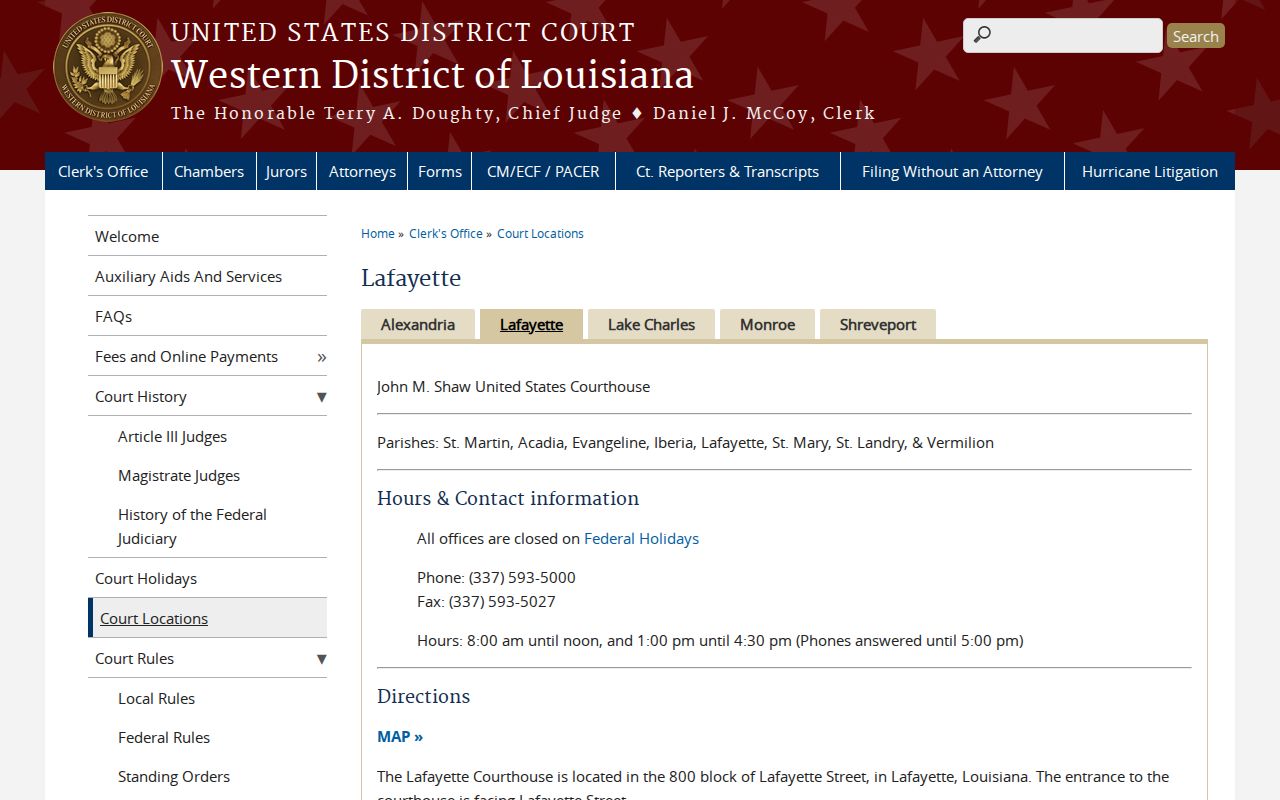
A federal arrest warrant can grow from a complaint backed by probable cause or from an indictment. Public dockets are read through PACER. That takes a registered account and a per-page fee. The U.S. Marshals Service serves federal warrants. A sealed warrant may never appear in a public docket, so an empty search there is not proof that no federal process exists.
Pending Cases and St. Landry Parish Warrants
La. R.S. 44:3 is missing from this rewrite; the correct link follows. La. R.S. 44:3 lets a St. Landry Parish law-enforcement agency withhold records while a criminal matter is pending. Public portions of a complaint, booking entry, summons, or citation may still come out.
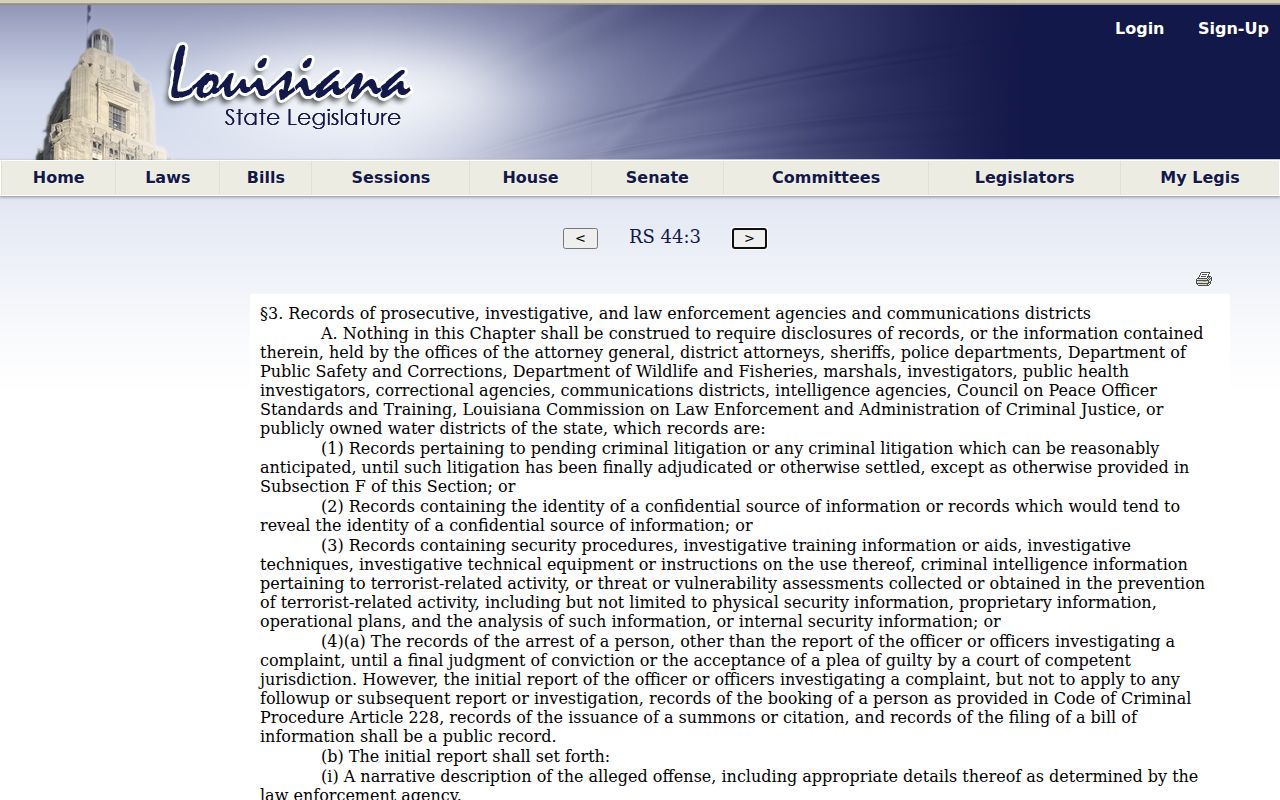
Juvenile files are confidential under Children's Code art. 412. Sealed juvenile records stay unavailable under art. 922, and expunged arrest or conviction records are confidential under La. C.Cr.P. art. 973. When you ask a St. Landry Parish agency for a file, request the non-exempt portion. Ask which exception covers anything withheld. A refusal on one part is not a refusal on the whole record. Note: A restricted file limits public access; it is not evidence that the warrant was withdrawn.